

From Community to Country: Indigenous Entrepreneurs Redefining Canadian Leadership
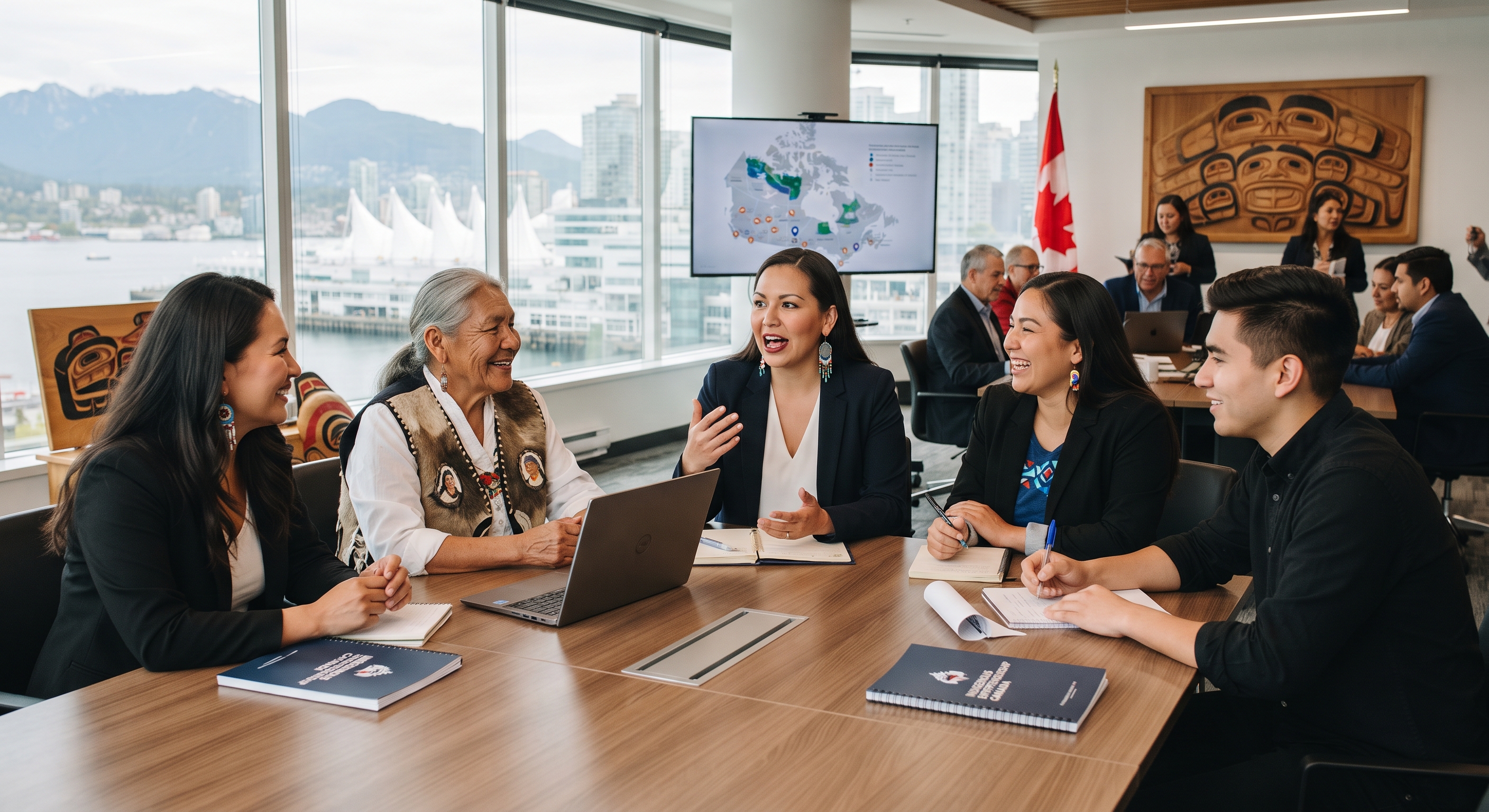
Across Canada, Indigenous entrepreneurs are reshaping what business leadership looks like, grounding economic success in community responsibility, cultural continuity, and long-term stewardship rather than short-term gain.
While mainstream entrepreneurship is often measured by speed and scale, many Indigenous-led ventures are guided by a different benchmark: whether growth strengthens the community and protects future generations.
That philosophy is increasingly visible in both local enterprises and large-scale national deals.
One of the most significant examples is the historic Indigenous-led ownership stake in Clearwater Seafoods, now co-owned through a partnership involving Mi’kmaq First Nations and industry partners. Rather than a symbolic gesture, the acquisition marked a structural shift. Indigenous communities moving from participants in Canada’s seafood economy to equity owners in one of its most valuable seafood companies. It represents a broader trend of Indigenous nations securing long-term economic positions in industries tied to their traditional territories.
Leadership in this space is also being driven by individual entrepreneurs who are building across sectors. Chief Clarence Louie, long-time chief of the Osoyoos Indian Band in British Columbia, is widely recognized for transforming community-based economic development into a model of Indigenous-led enterprise. Under his leadership, the Nation has built a diversified portfolio spanning agriculture, tourism, and commercial development, demonstrating how governance and entrepreneurship can operate together.
In another example, business leader and advocate Tabatha Bull, CEO of the Canadian Council for Indigenous Business, has played a central role in expanding opportunities for Indigenous entrepreneurs across Canada. While not a founder in the traditional startup sense, her leadership has helped shape the conditions under which Indigenous businesses can access capital, partnerships, and national visibility.
Across the country, Indigenous entrepreneurs are increasingly active in clean energy, technology, construction, and tourism. Many operate with a shared approach: profits are not an endpoint, but a tool for reinvestment into language revitalization, youth training, housing, and community wellbeing.
Yet systemic barriers remain. Access to capital continues to lag, infrastructure gaps persist in rural and remote regions, and regulatory systems often fail to reflect Indigenous governance structures. Despite this, Indigenous businesses continue to outperform expectations in resilience and adaptability.
What is emerging is not a niche segment of the Canadian economy, but a redefinition of it. Indigenous entrepreneurship is not simply about participation in existing systems. Rather, it is about reshaping those systems to reflect Indigenous values of responsibility, reciprocity, and sustainability.
In this model, success is not only what is built, but also what is strengthened for the generations that follow.